
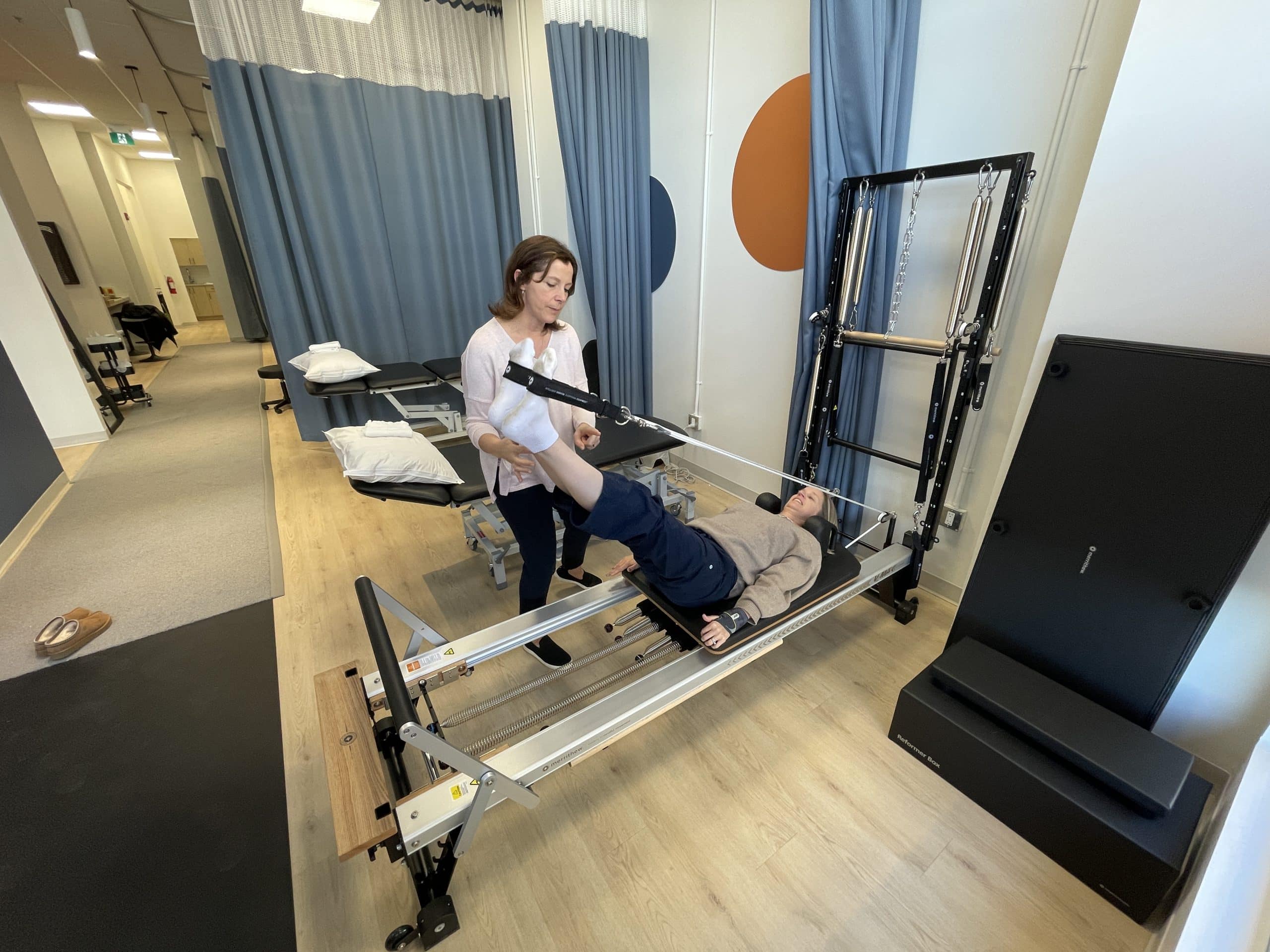
Clinical Pilates is known as a gentle yet powerful way to rebuild strength, support rehabilitation, and improve everyday movement. At Strive Physiotherapy in Calgary, we may integrate Pilates-based exercises into our treatment sessions to help you move with more ease and confidence, whether you are dealing with post-surgery discomfort, recovering from an injury, or simply wanting to feel stronger and more stable.

What Is Clinical Pilates and How Can It Help?
Pilates is a form of exercise that focuses on controlled movement, core strength, posture, and breathing. Many people notice that Pilates sessions help them feel more aligned, stable, and aware of how their body moves. For adults managing spine or joint discomfort, Pilates may support better movement patterns and reduce strain on sensitive areas.
In our Calgary clinics, we often use Pilates principles within our physiotherapy treatment plans. This approach may be especially helpful if you are managing conditions like persistent back pain, neck pain, or ongoing joint pain.
Clinical Pilates vs. Regular Pilates Classes
Not all Pilates classes are the same. In our clinic we focus on clinical Pilates and rehabilitation Pilates, which are guided by a physiotherapy assessment and tailored to your specific needs.
Here is how clinical Pilates may differ from general or gym-based Pilates physical fitness classes:
- Assessment first: We start with a thorough Pilates assessment of your posture, movement, strength, and symptoms before prescribing exercises.3
- Goal-focused: Sessions are designed around goals like injury recovery, surgery recovery, or improving function with osteoarthritis, rather than general fitness alone.2
- Integration with treatment: Clinical Pilates is often combined with hands-on therapy and other exercise therapy as part of a broader plan.2,3
For many patients, this physiotherapist-led Pilates approach may feel safer and more manageable than jumping into large, fast-paced Pilates classes.
Mat vs. Reformer: What’s the Difference?
When people explore beginner Pilates classes, they often ask about mat vs. reformer Pilates and what a reformer actually is.
- Mat Pilates: Performed on a mat using your body weight, small props, and gravity. Mat-based beginner Pilates may be ideal if you are new to exercise, nervous about pain, or working on basic control.
- Reformer Pilates: Uses a sliding carriage, springs, and straps to add resistance or support. Intermediate Pilates reformer exercises can be adjusted to make movements easier or more challenging which may be helpful during injury recovery or Pilates rehab.
Both types of Pilates sessions can be valuable; the best choice depends on your comfort level, mobility, and goals. In many clinical Pilates reformer classes, we gradually progress from basic control to more dynamic strength and balance work as you improve.
What Does Pilates Do to the Body?
From a simple anatomy perspective, the specific anatomy affected by a Pilates workout often includes the deep core muscles, spine stabilizers, hip and shoulder muscles, and postural stabilizers around the neck and upper back. Strength and Pilates-based training may help these muscles support your joints more effectively. This can contribute to more efficient and less painful movement over time.2,3
Exercise therapy in general can play a role in easing pain and improving function for conditions like osteoarthritis, although effects may be small and vary from person to person.2 When these exercises are thoughtfully tailored, Pilates may be one way to gently load joints, build control, and support long-term mobility.
Can Clinical Pilates Help With Pain and Injury Recovery?
Many patients ask, “Can Pilates help with pain?” While every situation is unique, exercise-based approaches are often included in care plans for joint-related issues and patellofemoral (kneecap) pain.2,3 Pilates-style strengthening and control exercises may complement these strategies by helping you move with better alignment, coordination, and muscle balance.

When combined with hands-on care and education, Pilates rehab provides a structured, low-impact way to stay active during recovery.
At Strive Physiotherapy, we may incorporate Pilates into treatment plans for:
- Sports injury rehabilitation
- Chronic or recurrent back and neck discomfort
- Osteoarthritis and other joint concerns2
- MVA injury and post-accident recovery
- Pre- and post-surgery strength and control
Is It Better to Go to an In-Person Pilates Session?
Online videos can be a helpful starting point, but in-person physiotherapist-led Pilates may offer important advantages, especially if you are dealing with pain, injury, or complex movement issues.
- Real-time feedback: Our team can help you adjust your posture and muscle activation to reduce strain and improve effectiveness.
- Safety: We monitor for signs of Pilates injury or flare-ups and adjust exercises quickly if something does not feel right.3
- Progression: As your strength and control improve, we can safely progress you from beginner Pilates classes to more challenging exercises, whether on the mat or reformer.
For many patients, especially those using Pilates rehab after surgery or a major injury, this guided, in-person approach may feel more reassuring and manageable than trying to figure things out alone at home.
Our Approach to Pilates Therapy in Calgary
At Strive Physiotherapy, our experienced professionals bring together manual therapy, individualized home programs, and clinical Pilates to create a plan that fits you. We begin with a one-on-one assessment to understand your history, current symptoms, and goals. From there, we may recommend individual treatment sessions focused on Pilates, strength, and mobility.
In some cases, we may also recommend complementary services such as massage therapy or other exercise-based care if this aligns with your goals.2,3
FAQs About Pilates at Strive Physiotherapy
Is clinical Pilates suitable for beginners with pain?
Yes, we regularly work with people who are new to exercise or nervous about moving because of pain. Clinical Pilates for beginners is paced carefully, with close supervision and modifications to respect your current comfort and abilities.2,3
Can Pilates be part of rehab after a knee or shoulder issue?
Pilates-style exercises are often integrated into rehabilitation plans for sore muscles and joints, focusing on alignment, strength, and movement control.2,3
How quickly will I notice benefits when doing Pilates?
Some people feel improvements in body awareness and posture within a few sessions, while changes in strength, control, and day-to-day comfort usually build gradually over time.
Is clinical Pilates safe if I have arthritis?
Gentle, well-guided exercise can be part of many arthritis management plans, and Pilates may be one way to work on strength and movement with lower impact.2 We adjust the intensity, range of motion, and positions to match your joints’ tolerance and your comfort level.
What should I wear and bring to a Pilates session?
We usually recommend comfortable, stretchy clothing you can move in easily, and socks or bare feet. If you have imaging reports or previous treatment notes, feel free to bring them, but they are not required for us to get started.
Book a Clinical Pilates Assessment at Strive Physiotherapy
If you are wondering whether Pilates could fit into your recovery or wellness plan, our Calgary team would be happy to guide you. Book an Appointment to get started with a personalized assessment and explore whether clinical Pilates is right for you.
Strive Physiotherapy Main Site
References
- Karasuyama M, et al. Exercise for multidirectional instability of the shoulder. Cochrane Database Syst Rev. 2026. doi:10.1002/14651858.CD015450.pub2
- Schleimer T, et al. Effectiveness of exercise therapy for osteoarthritis: an overview of systematic reviews and randomised controlled trials. RMD Open. 2026. doi:10.1136/rmdopen-2025-006275
- Hart HF, et al. Bridging Gaps in Delivering High-Value Treatment for Patellofemoral Pain: A Systematic Evidence and Gap Map of Interventions for Patellofemoral Pain. J Orthop Sports Phys Ther. 2026. doi:10.2519/jospt.2026.13511